Hunger is declining worldwide
Over the past 10 years, the share of the world that has enough food has increased from ~85% to ~90%, meaning that only 1 in 10 people around the world do not have enough to eat on a regular basis. Improvement has been most rapid in sub-Saharan Africa, where the share of hungry people has decreased from ~1/4 to ~1/5.
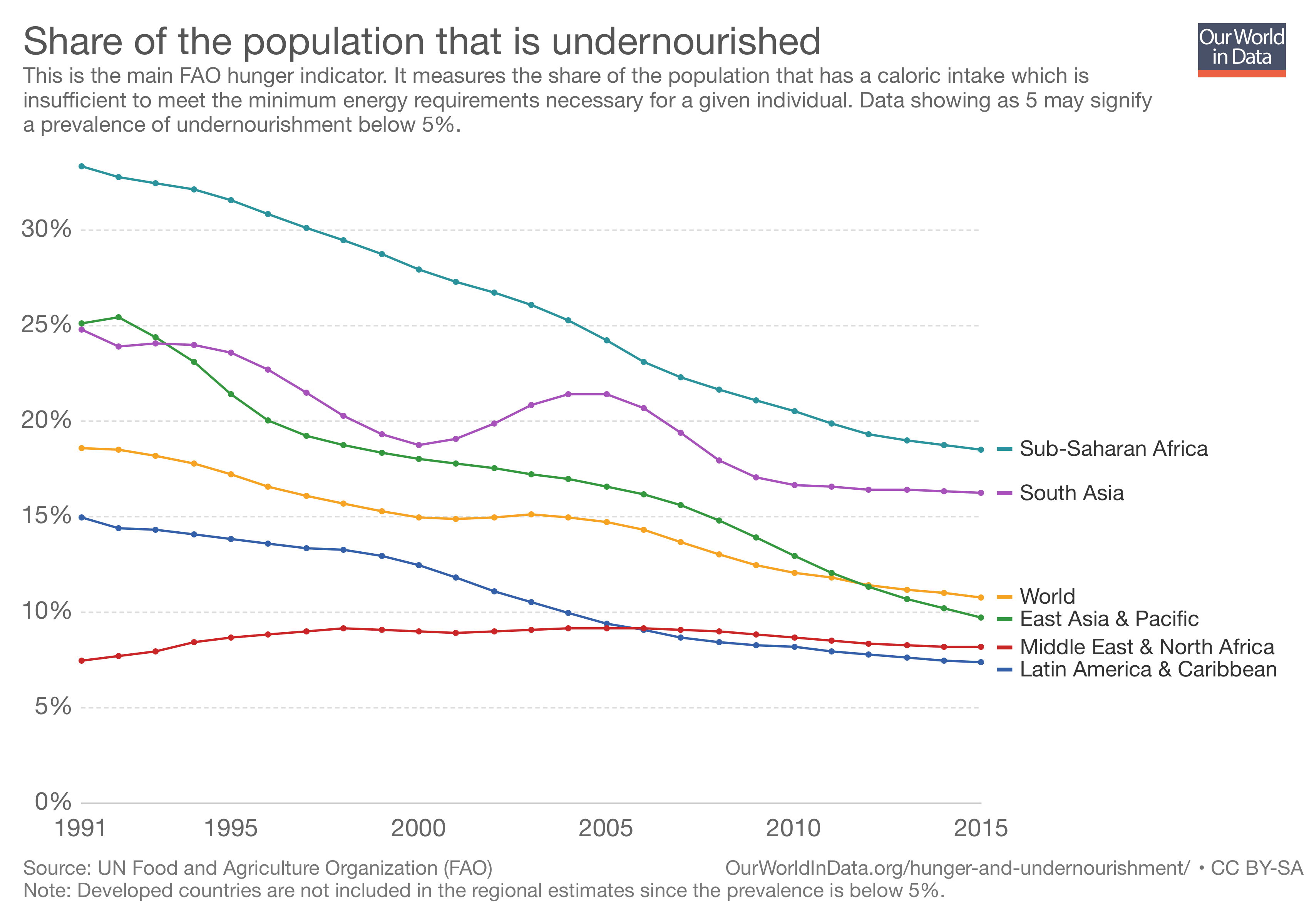
This decrease in hunger is also reflected in children’s health, with the share of children <5 yrs old who are underweight for their age having decreased from 18.7% to 14% over ten years.
Much of this worldwide decrease in hunger can be attributed to vastly improved crop yields throughout the world. Starting about 100 years ago, statistics, scientific breeding programs, and improved irrigation and fertilizers have steadily increased crop yields. You can now obtain more than **8 times** as much wheat, corn, barley, or oats from the same area of land as you could 100 years ago.
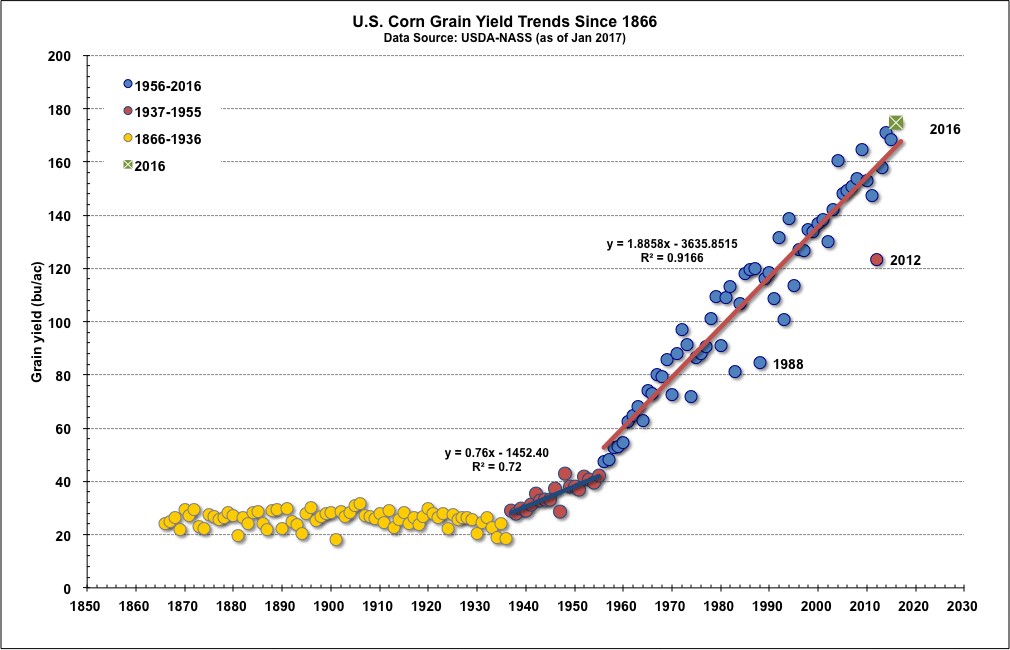
Rice shows a similar story, with a ~4x increase in yield per acre. New technologies such as direct genetic modifications (GMOs) to make crops more nutrient dense as well as drought and temperature resistant are continuing to improve food security worldwide. Note these technologies do have drawbacks, mainly due to corporate control and monopolistic practices and the increased pesticide use they allow.
The main challenges in combating hunger around the world are food distribution problems – e.g. poverty. Some people just do not have enough money to purchase food from the abundant (capitalist) global market, and live on low-quality land that does not produce enough nutrients. In addition, conflict and corruption continue to make it difficult to ensure sufficient food for all. Finally, climate change threatens to destabilize food productions mechanisms, and mitigations are an area of active research.
However, these problems are slowly being solved, and current technologies should have no problem producing enough food to feed the world even with projected population growth, if only we can solve the distribution problems.